Astrology Basics · 6 min read
Zodiac Signs vs Constellations: What Your Chart Measures
Your tropical zodiac sign comes from a measured position on a twelve-part circle. Constellations map the background sky. Here is how to tell the two apart.
By Celestio ·
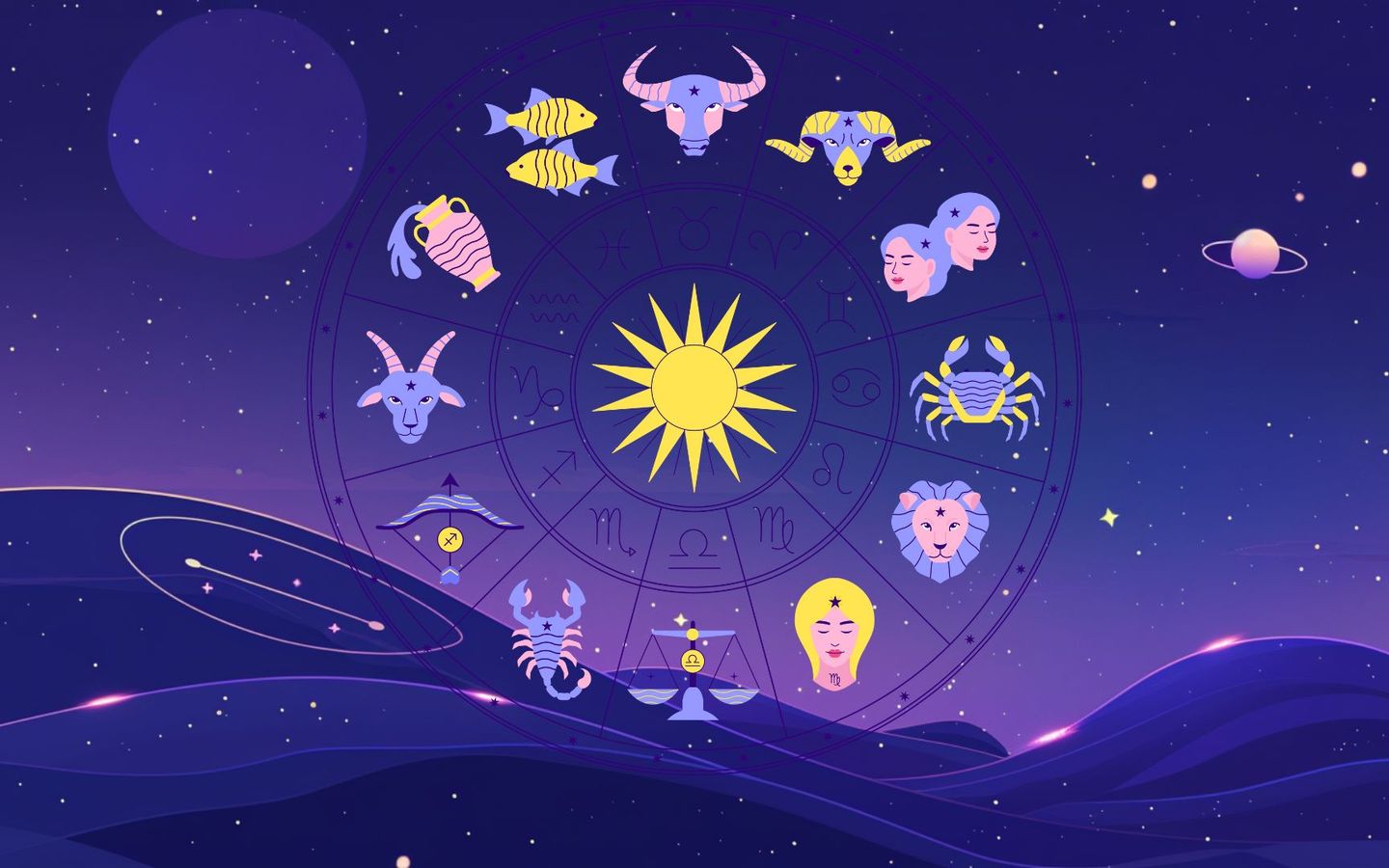
Zodiac signs divide the Sun's apparent yearly path into twelve equal 30-degree sections; astronomical constellations are regions of the sky with their own boundaries. In a tropical birth chart, your planet's sign is measured from the March equinox point, so its sign and its background constellation answer different questions.
That distinction clears up a familiar surprise. You read one sign in a chart and another name in a stargazing app. Both labels can describe the same direction in the sky. To understand the difference, begin with what each map is measuring.
The circle behind your zodiac sign
The ecliptic is the Sun's apparent path against the background sky over a year, created by Earth's orbit around the Sun. A birth chart uses position along that circle, called ecliptic longitude, to locate the Sun, Moon and planets. Longitude tells you how far around the circle a point lies from the chosen starting point.
Imagine a circular ruler with 360 degree marks. Divide it into twelve equal stretches and give each stretch a name: Aries, Taurus, Gemini and the remaining signs in order. Each sign covers 30 degrees. A planet's degree within its sign tells you where it sits inside that stretch.
The sign name and the degree belong together. Venus at 2 degrees Gemini and Venus at 28 degrees Gemini share a sign, but occupy different parts of it. When you compare charts or read aspects, that precise position matters. The guide to the twelve signs explores their symbolic meanings; the circle explains how a chart assigns their names.
Where the tropical zodiac begins
The tropical zodiac begins at the March equinox point, where the Sun crosses the celestial equator moving north. That direction is 0 degrees Aries. The celestial equator is Earth's equator extended onto the sky; NASA's explanation of celestial reference systems describes the equinox as the crossing that supplies a reference point.
This starting point belongs to the whole Earth. The March equinox begins spring in the Northern Hemisphere and autumn in the Southern Hemisphere. A tropical chart uses the same zodiac reference in Lisbon, Cape Town and Sydney. Your location matters separately when the chart calculates the horizon and houses.
The equinox-based convention has a long history. In the Tetrabiblos, Ptolemy explicitly relates the beginnings of the signs to the equinoxes and solstices. Modern tropical charts retain that reference while using contemporary calculations for planetary positions. The geometric convention and the astrological reading of a sign are separate layers of the chart.
What astronomers mean by a constellation
An astronomical constellation is a bounded region of the sky. The International Astronomical Union recognizes 88 of these regions, covering the whole celestial sphere. A constellation includes the area inside its boundary, beyond the familiar lines that connect its bright stars into a figure.
Those boundaries produce regions of different shapes and sizes. Where the ecliptic passes through them, the stretches have unequal lengths. Equal zodiac signs and unequal constellation regions therefore divide the sky differently, even before you consider how their reference points have shifted over time.
Aries can mean a 30-degree zodiac sign or the IAU constellation called Aries. The shared name reflects their historical relationship. Check which meaning an author is using: a chart's placement table usually gives a sign and degree; a sky map identifies the constellation behind an observed object. That one question often resolves an apparent disagreement.
Read your own chart
Enter a birth date and place for a chart calculated for that moment, and a reading written for it. Free, and the birth time is optional.
Read your chartWhat precession changes
Earth's axis slowly changes its orientation, a motion called axial precession. The equinox point consequently changes its position against the background stars over long periods. NASA describes the full precession cycle as roughly 26,000 years. Across centuries, the relationship between equinox-based coordinates and the star background gradually shifts.
The tropical zodiac follows the equinox as its reference. It continues to begin at 0 degrees Aries at the March equinox. A constellation map follows its defined sky regions. As their relationship changes, the constellation behind a tropical sign need not carry the same name.
Precession is a change of reference over time, rather than an instruction to edit your recorded Sun sign each year. When you calculate your birth chart again with the same birth details and the same tropical settings, you are asking for the same historical placement. A current sky map asks where an object appears against the stars now.
A worked example with two placements
Take a hypothetical chart with the Sun at tropical longitude 40 degrees and the Moon at 130 degrees. These are teaching coordinates, rather than a chart calculated for a real person.
Aries occupies the first 30 degrees. Taurus begins at 30 degrees, so the Sun's 40-degree longitude is 10 degrees into Taurus. Leo begins at 120 degrees, so the Moon at 130 degrees is at 10 degrees Leo. The two positions are 90 degrees apart: 130 minus 40 equals 90. Astrologers call that angular relationship a square.
You can translate each placement into a plain sentence. The Sun is the planet or luminary being read; Taurus is its sign; 10 degrees is its precise location within that sign. The Moon has its own sign and degree. A constellation name is additional sky-map information, rather than another step in that sign calculation.
For another hypothetical position, take Venus at 62 degrees. Gemini begins at 60 degrees, which places Venus at 2 degrees Gemini. Its distance from the example Sun at 40 degrees would be 22 degrees. Reading the circle keeps the arithmetic consistent even when the signs have different names. The birth chart reading guide shows how to build meaning from those placements.
Ophiuchus and the sidereal zodiac
Ophiuchus is a constellation crossed by the ecliptic. The Royal Observatory of Belgium distinguishes the thirteen constellations crossed by that path from the twelve equal zones used for tropical zodiac calculations. Ophiuchus belongs on an astronomical constellation map; the twelve-part tropical circle continues to have twelve signs.
Sidereal astrology uses a star-referenced zodiac. Its common twelve-sign systems also use equal 30-degree signs, with an offset from the tropical zodiac called an ayanamsha. Traditions choose different offsets. A sidereal sign is therefore a third idea to distinguish from both a tropical sign and an irregular IAU constellation region.
When comparing two charts, check the zodiac setting before comparing sign names. Check the house system separately: changing from Placidus to Whole Sign is a different operation from changing the zodiac reference. Celestio uses the tropical zodiac. Your free birth chart gives the placements together so you can read the Sun, Moon and the rest of the chart in one consistent frame.
Frequently asked questions
Has precession changed my tropical Sun sign?
Your tropical Sun sign is calculated from the Sun's position relative to the equinox at your birth. Precession changes how that reference aligns with the background stars over long periods. Recalculating the same birth moment with the same tropical settings gives the same sign; a constellation map is reporting a different kind of position.
Is Ophiuchus part of the tropical zodiac?
Ophiuchus is an astronomical constellation along the ecliptic, while the tropical zodiac consists of twelve equal 30-degree signs beginning at the March equinox point. Those are different divisions of the sky. A stargazing map can place an object in Ophiuchus while an astrology chart describes that object's position using one of its twelve signs.
Why can a stargazing app show a different sign name?
A stargazing app may label the astronomical constellation behind an object, while a birth chart labels its zodiac sign. Constellations have unequal boundaries, and tropical signs use the equinox as their starting point. Check whether the app means constellation, tropical sign or sidereal sign before comparing its label with the placement in your birth chart.
Why do zodiac date tables sometimes disagree?
Zodiac date tables round a precise sign-entry moment to a calendar date. The Sun reaches each sign boundary at a particular time, and that time varies between years and local time zones. A chart calculated for your birth moment uses the actual position, which is more specific than a general date range printed beside a sign name.

Celestio