Love, Relationships & Synastry · 7 min read
The Best Synastry Aspects for Long-Term Compatibility, Not Just Chemistry
Chemistry brings two people together; other contacts keep them there. The synastry aspects astrologers link with lasting bonds: the Sun and Moon, Moon and Venus, Saturn and Jupiter.
By Celestio ·
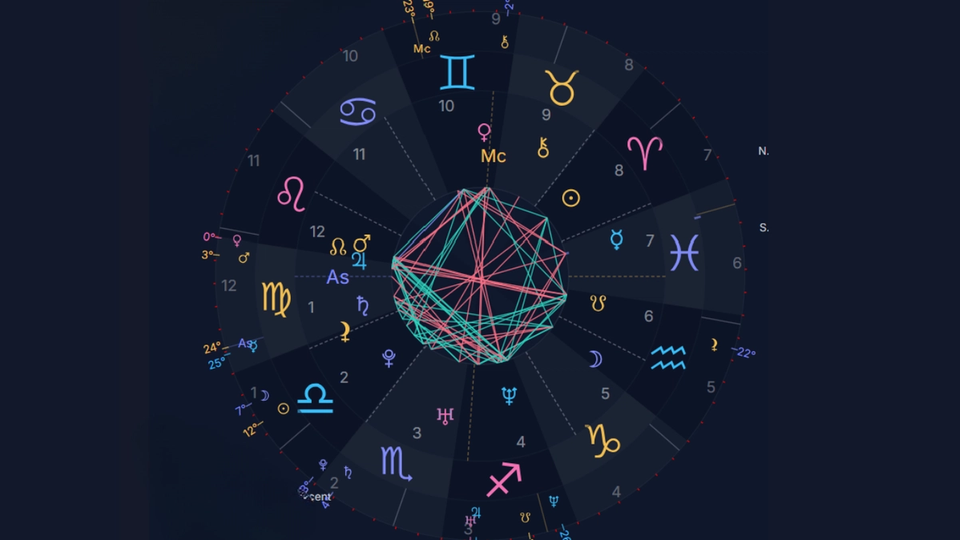
The synastry aspects astrologers most often link with long-term compatibility are harmonious Sun–Moon contacts, Moon–Moon and Moon–Venus contacts, Saturn touching the other person's Sun, Moon or Venus, and Jupiter softening the luminaries. These describe emotional ease, warmth and commitment, the things that matter once the first excitement settles.
Chemistry contacts, Venus–Mars above all, describe how two people are drawn together. Staying-power contacts describe whether daily life together feels like home. The two groups overlap less than most people think, which is why some electric relationships burn out and some quiet ones last for decades.
Chemistry and staying power are different contacts
Astrologers sort synastry contacts into two broad groups.
- Chemistry contacts: Venus–Mars, Mars on the Ascendant, and Pluto or Uranus touching the Moon or Venus. These describe attraction, excitement and intensity.
- Staying-power contacts: Sun–Moon, Moon–Moon, Moon–Venus, Saturn to personal planets and Venus–Saturn. These describe comfort, care and commitment.
This distinction is very old. Ptolemy wrote in the 2nd century that unions formed through Mars and Venus come "through love", but "are unsure and flourish only briefly". Modern astrologers drop his moralising and keep the observation: Mars in synastry describes desire, and desire on its own does not promise years. The relationships astrologers see last tend to have chemistry supported by the luminaries and by Saturn. The Venus–Mars synastry guide covers the chemistry side; this guide covers the rest.
Sun–Moon harmony: feeling like yourself together
When one person's Sun forms a conjunction, trine or sextile to the other person's Moon, both people tend to feel like themselves in the relationship. The Sun person's way of being is exactly what the Moon person finds comforting, and the Moon person's care supports the Sun person's sense of who they are.
Ptolemy treated this as the central sign of a lasting marriage: luminaries in harmonious aspect, "particularly when this comes about by exchange", meaning when each person's Sun and Moon relate to the other's. In practice, a couple with her Moon trine his Sun and his Moon sextile her Sun rarely have to explain themselves to each other. It does not make them alike. It makes their differences easy to live with.
Moon contacts: the texture of daily life
The Moon describes emotional needs, habits and what home feels like, so Moon contacts decide what an ordinary week together is like. That is why many astrologers give them more weight than any other factor for a long relationship.
- Moon conjunct, trine or sextile Moon: you need similar things when tired or upset, and you build a home that suits you both. Water and earth Moons tend to want safety and routine; fire and air Moons want stimulation and room.
- Moon conjunct or trine Venus: one of the sweetest contacts in synastry. The Venus person's affection reaches the Moon person exactly where they need it, and the Moon person makes the Venus person feel their love is received.
- Moon square or opposite Moon: both of you feel deeply, but differently. One wants to talk it through tonight and the other needs to sleep on it. Couples with this contact last when they learn each other's rhythm rather than expecting their own.
The Moon is also the planet most affected by an unknown birth time. It moves about 13° a day, so without a time its degree can be uncertain by several degrees, and on the day it changes sign, so is its sign. Moon compatibility has its own guide.
See how you two fit
Enter two birth dates and places. See your strongest connections free, then read the full compatibility report written for the two of you.
Compare chartsSaturn: glue or burden
Saturn contacts to the Sun, Moon, Venus, Mars or Mercury turn up again and again in long-lasting relationships. They feel serious, binding and real, which is why astrologers often call Saturn the glue of synastry. That phrase is a saying among astrologers rather than a rule from any one teacher, and it tells only half the story.
Saturn also describes duty, fear and criticism. The Saturn person tends to feel responsible for the other, and can become the one who corrects and limits. The other person feels steadied and taken seriously, and sometimes judged or held back. Each school reads this differently:
- Psychological astrologers, such as Liz Greene in Saturn: A New Look at an Old Devil, see Saturn contacts as places where each partner meets their own fears, often by projecting them onto the other. The weight lifts as each person owns their part.
- Traditional astrologers treat Saturn as a difficult planet. Ptolemy said harsh planets aspecting the luminaries make a marriage quarrelsome, yet he singled out Venus with Saturn as producing "pleasant and firm unions".
- Modern popular astrology reads Saturn as commitment, full stop, and that is the part to read with care.
The trine and sextile give Saturn's reliability with less of its weight. The conjunction, square and opposition bind more strongly and ask for more care.
A worked example: Saturn on Venus
His Saturn sits at 3° Libra and her Venus at 1° Libra, a conjunction 2° from exact. She sees him as dependable, the one to build a life with. He takes her affection seriously and shows his love through steadiness rather than words. Over time, he may hold back his own affection, or judge her spending and pleasures as frivolous, and she may begin to feel she is never quite enough. Ptolemy would call this "pleasant and firm"; a psychological astrologer would watch for her feeling smaller. What tips it is the rest of the chart: a warm Moon–Venus or Moon–Moon contact supplies the tenderness Saturn does not.
Jupiter and Venus: the contacts that keep it kind
Jupiter and Venus are the two benefics of traditional astrology, the planets that make things easier. In synastry they describe generosity, humour and the habit of thinking well of each other.
- Jupiter conjunct, trine or sextile the other's Sun or Moon: mutual encouragement. The Jupiter person believes in the other, and the other feels more capable around them.
- Jupiter conjunct or trine Venus: one of the most pleasant contacts there is: good humour, shared pleasures and an easy enjoyment of each other's company that lasts.
Ptolemy noticed that benefics touching the luminaries can rescue an otherwise difficult pairing, bringing what he called "renewals and recollections, which preserve kindness and affection". In plain terms, Jupiter is why some couples keep forgiving each other.
Mercury: talking for forty years
Mercury rarely appears on lists of romantic aspects, but it becomes more important the longer a relationship lasts. It describes how two people talk, plan, decide and repair a misunderstanding. A harmonious Mercury contact means conversations that keep going for decades; a Mercury square means two people who must translate for each other, which works when both know they are doing it. Mercury in synastry reads these contacts in detail.
What a lasting synastry chart looks like
There is no perfect synastry chart, and astrologers do not look for one. A relationship built to last usually shows a mix:
- A warm emotional base: Moon–Moon or Moon–Venus harmony.
- An identity bridge: Sun–Moon contacts, ideally in both directions.
- A commitment structure: Saturn contacts, ideally softened by the Moon or Venus.
- Kindness: Jupiter or Venus touching the luminaries.
- Some chemistry, even if it is a steady flame rather than a wildfire.
Squares and oppositions belong in that picture too. They are where two people push each other to grow, and a chart with only trines can describe a relationship that is comfortable and never quite alive. Astrologers read contacts as dynamics, not verdicts. They describe what the relationship will ask of each person, and the two people decide what to do with it. For the contacts that feel like fate at first meeting, read the synastry aspects that feel fated.
Frequently asked questions
Can a relationship last without Saturn aspects in synastry?
A relationship can last without Saturn aspects in synastry. "No Saturn, no staying power" is a popular saying, not a rule from any tradition. Saturn contacts are common in long relationships because they describe commitment, but Sun–Moon harmony, Moon–Venus warmth and Jupiter's kindness also describe lasting bonds. Astrologers read the whole picture rather than one planet.
Is Saturn good or bad in synastry?
Saturn in synastry is both binding and demanding. It describes commitment, reliability and the sense that a relationship is serious, and also criticism, restriction and fear of not being enough. The Saturn person tends to feel responsible; the other person feels steadied or held back. Trines and sextiles bring more of Saturn's support, while conjunctions, squares and oppositions bind more strongly and ask for more care.
Will Venus conjunct Saturn in synastry last?
Venus conjunct Saturn in synastry is one of the contacts most often found in lasting relationships. Ptolemy described Venus with Saturn as producing "pleasant and firm unions". The Venus person finds the Saturn person dependable; the Saturn person takes their affection seriously. The risk is coolness or criticism over time, which warm Moon and Venus contacts elsewhere in the two charts help balance.
What is the best synastry aspect for marriage?
The synastry aspect most traditionally linked with marriage is a harmonious contact between one partner's Sun and the other's Moon. Ptolemy treated it as the main sign of a lasting union nearly two thousand years ago. Modern astrologers add Moon–Moon and Moon–Venus harmony for emotional ease, and Saturn contacts for commitment. No single aspect decides a marriage; the mix matters most.
See what holds you together
A compatibility report reads both of your whole charts together and shows your strongest connections first, including the contacts that hold a relationship together over time. For the method behind it, read what synastry is, and start with your free birth chart if you want to know your own Moon and Venus first.
Celestio